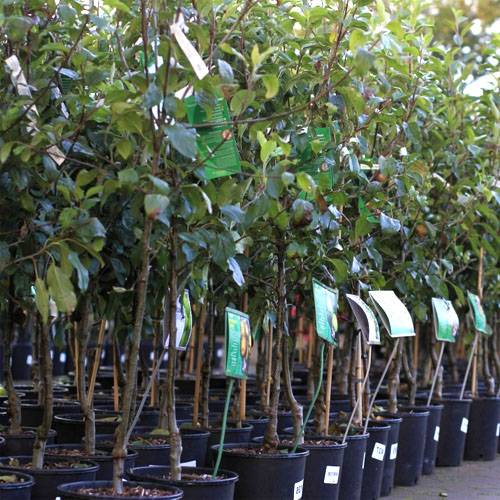
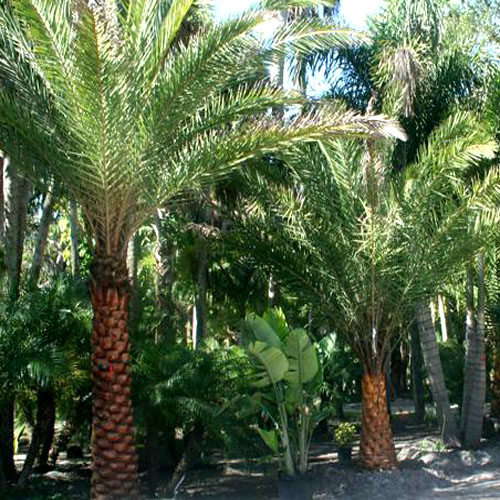
Fruit Trees require 28 days to mature, after which they produce one fruit per day when in season. Fruit can be allowed to
accumulate up to three days before harvesting. Fruit trees do not need to be watered, and will not die in the winter.
Fruit saplings will grow during any season, allowing players to plant and prepare for upcoming season to bear fruit.
Each Fruit tree must be planted in the center of a clear 3x3 ground area in order to grow. The 3x3 area must remain clear of
objects, flooring, and terrain features (including grass); otherwise the tree will not grow or mature. This 3x3 area also
cannot overlap the area for another fruit tree. Thus, the nearest you can plant saplings next to each other is with two tiles
between them in every direction.
A Fruit Tree is planted directly into untilled ground. Fruit trees can grow in the Greenhouse, in the center soil or around the
border. Fruit trees planted in the greenhouse will bear fruit every day after maturity, and will not change color according to
the season.
Fruit trees can be chopped down, and yield normal wood. Fruit trees can be struck by lightning, causing them to become burnt for
4 days. During this time, they will not produce fruit, but will instead produce coal. After the 4 days are up, they will return
to normal.
Fruit trees cannot be easily moved or relocated, they must be chopped down and replanted, unless editing game files. Take extra
caution in planning and placing saplings, because the expensive sapling cannot be retrieved, and mature trees will take years to
age again.
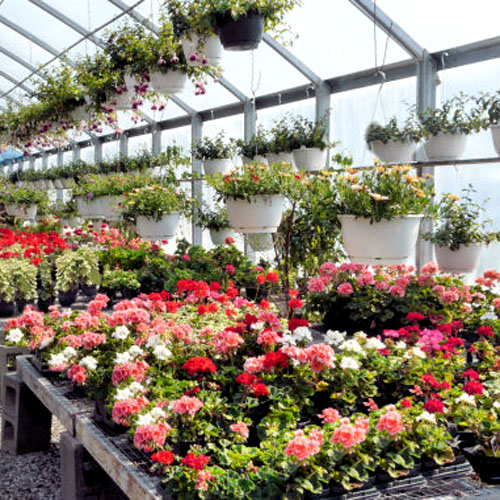
Growing plants from seeds is not only easy to do, it is one of the cheapest ways to fill your garden with abundance. Very often we
think only of growing vegetables from seed, but flower seeds are just as easy to start and you'll have a greater choice of variety
and color, if you are willing to start your own.
Perennial flowers may not bloom their first year, but if you have the patience to wait, you can fill your garden for a fraction of
the cost of buying plants. Annual flowers will bloom right on schedule. Many of them will even seed themselves. If you've been
dreaming of non-stop color, pick up some seed packets and get started.
Annual flowers are the backbone of billowy cottage gardens. Many annuals will seed themselves. All you have to do is leave the
flowers on the plants at the end of the season. They will drop seed and magically, the seeds will weave themselves throughout the
garden. Okay, it's not magic and sometimes you will get too many seedlings in one spot, to the point of them becoming a nuisance,
but small seedlings are very easy to pull or transplant.
Annual flowers tend to grow quickly and even those you direct sow outdoors in the spring, will flower at their usual bloom time or
very soon after. Any of the annuals that self-sow are good candidates for starting from seed, either indoors or direct sown.
Most perennial plants don't bloom until their second year. They spend their first season growing a strong root system and lots of
leaves for photosynthesis. Sometimes you can get around this, by starting your perennial seeds in the fall and fooling the plants
into thinking the following spring is year two. Sometimes you have to be patient.
Once your perennial flowers are established, they will not only begin blooming, they will get larger every year. In a few years,
you will be able to make even more plants, by dividing the ones you have. What's more economical than free plants?
Not all seeds know it's time to sprout, just because they are planted in soil. Some seeds need a signal that it's time to germinate.
It can be a change in temperature, a moisture level, or increasing light. These two methods are good for tricking seeds into germinating
sooner than they might. Winter sowing involves starting seed outdoors, while the temperatures are still frigid. Not all seeds can
survive freezing temperatures, but there are some that absolutely need the freezing and thawing action to break dormancy or to crack
their hard coverings. Seeds with really tough or thick coverings can take forever to germinate. Scarification can give them a jump start.
Once your garden is overflowing with abundance, you'll want to keep it in flower. If you love to garden, this is the fun part.
Deadheading, pruning, and re-seeding let you take part in the seasons of your garden. This is where you really get to know your plants,
how they perform, and what they like. A long blooming garden has another perk, too. At the end of the season, you can collect still
more seeds from your own plants, to sow the following year. If you already have enough of those plants and want something different,
either swap seeds or start the seedlings anyway and swap the seeding with friends, in the spring. Look for seed swaps in your
community, at public gardens and online or start one of your own.
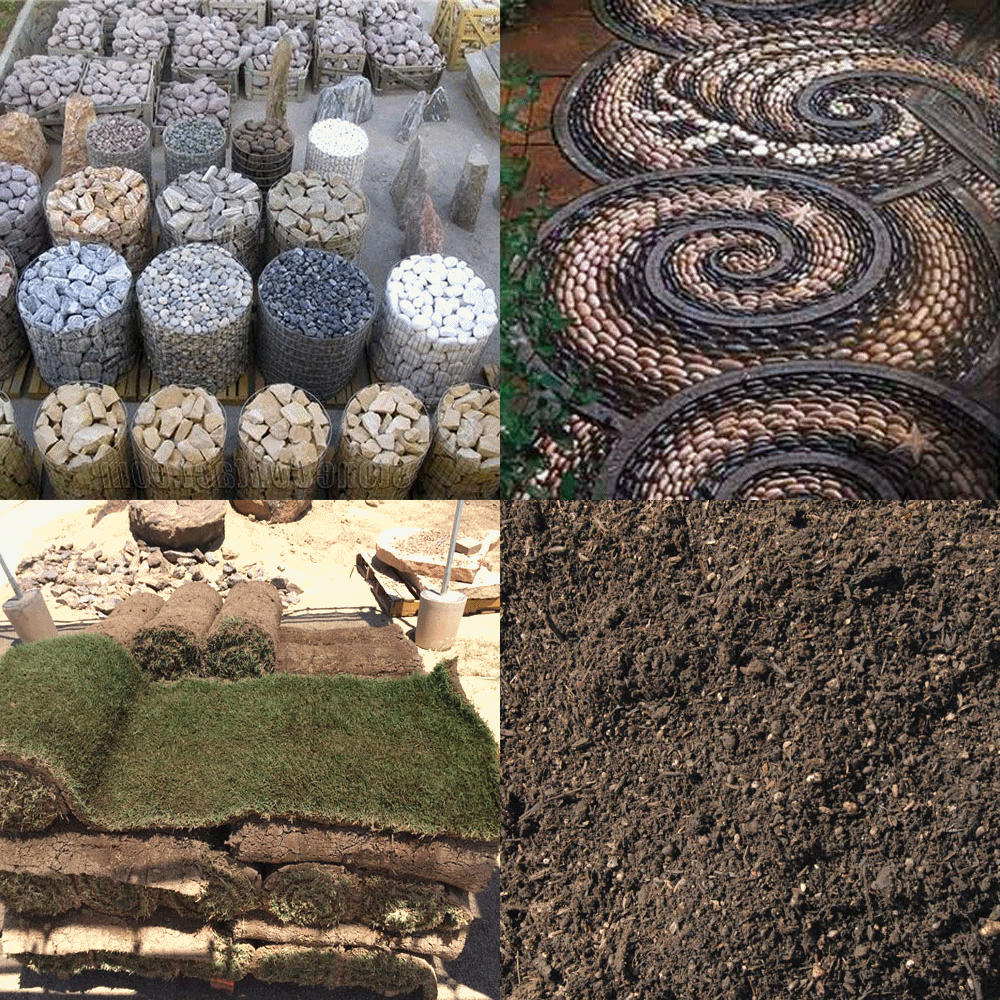
Landscape materials are used for hardscape areas around your house, such as the driveway, walkways, paths, patios, and edging. Use
this landscape materials primer to evaluate your choices.
Plants may outnumber landscape materials, but that doesn't mean you can't use the nonplant pieces in your landscape to complement a
garden's design. Here's a landscape materials primer and some smart selection tips for paving, edging, and creating paths and walls.
The Basics: Concrete is among the most cost-effective and long-lasting landscape materials. It must be formed, poured, finished, and
cured quickly. However, concrete shouldn't be used in spots where the ground may move or heave -- for example, around a tree that
can push it up and out or in an area that doesn't properly drain. Concrete should also be cleaned regularly to prevent stains from
oil and grease, mildew, or rust.
Brick, flagstone, and interlocking pavers are durable and classic landscaping materials; they can be mortared in place or more
casually laid directly on sand or crushed rock (heaving is often less of a problem in the North if you lay them directly into a base
without using mortar). To maintain them, inspect regularly for broken or loose mortar or paving units and replace as soon as possible.
Mildew is unsightly and slippery and should be removed, as should moss and algae in moist, shaded spots. Mortared-in-place pieces
can be broken out and fixed with new pieces. If areas become displaced, relevel them with sand.
Bricks are made of clay and come in a variety of colors as well as half-thicknesses. While less expensive, concrete bricks have a
coarse finish and dull uniformity. Bricks can also be repurposed or reclaimed from other projects, but may have to be cleaned of old
mortar. Common or building bricks are made of clay and designed for the inner layer of a brick wall. They are not long-lasting choices
for outdoor paths or patios. Face bricks, a higher quality, have a smooth face that resists weathering.
Flagstone and bluestone are widely used for pathways and patios. They work best set in mortar but can be bedded in sand or crushed
rock and need only sweeping and periodic washing. These landscape materials have a natural look.
Concrete pavers are manufactured in different patterns, many of which interlock for stability. Less expensive than brick or flagstone,
concrete pavers can also be laid in place quickly on any smooth, firm surface.
Planting Tips : Use drip irrigation or soaker hoses instead of oscillating sprinklers as they result in less water loss due to evaporation.
Position watering devices to prevent water loss by water falling in storm gutters, walkways or in the street. Mulch beds to help
retain soil moisture. Set up a rain barrel to collect rain water for watering plants. Plant a rain garden or develop a swale to help
retain water in the soil and prevent runoff. Install a cistern to collect water to use for plants, washing clothes, bathing and
other non-potable uses as local ordinances allow. Reduce the size of your lawn by replacing some of it with beds of shrubs or drought
tolerant perennials. Have your lawn mower serviced regularly so it runs efficiently and pollutes less. Pull a few lawn weeds by hand.
This is often more effective and less damaging than resorting to chemical sprays. Don’t mow your lawn more frequently than required.
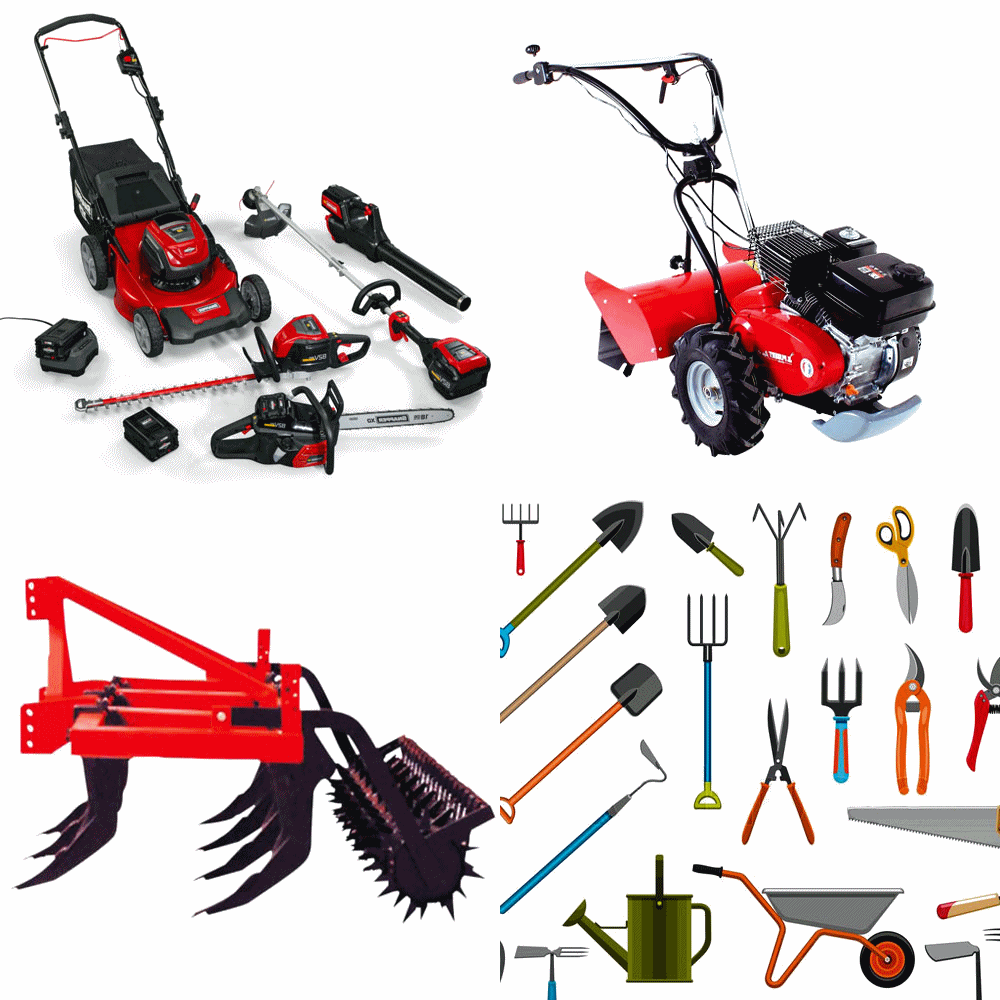
Keep the mower blade sharp. Replace your gas-powered mower with an electric one or switch to one of the new, user-friendly push mowers.
Get some exercise and do some hand digging. Pull weeds by hand. This is often more effective and less damaging than resorting to
chemical sprays. Add landscape lighting only where it is really needed. And when used, use compact fluorescent bulbs or solar-powered
lights. Low voltage lighting also uses less electricity and is safer for outdoor use. Cut down on holiday lights and invest in the
new LED lights that use a lot less energy. Demand higher accountability of local governments for their expenditures. Do we really
need all the night light pollution around us? As energy prices rise demand that local governments focus on what is most important in
their expenditures. Reducing expenditures on lighting buildings, parking lots, gardens, etc at night may just be a waste of money
that could be better spent elsewhere. Develop your own compost pile so you can return the valuable plant material back to the soil in
your yard. Don't send plant-based garden waste to a landfill. Instead support your local yard waste recycling program for any
materials you can't compost and use in your own yard.